
Is Nepal Safe to Travel After the Bhotekoshi Flood? A 2026 Travel Safety Update
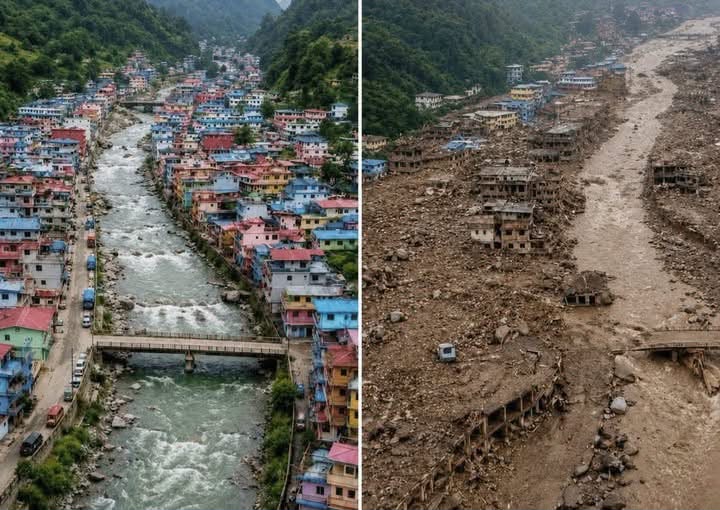
If you are planning a trip to Nepal and have recently seen news about the devastating floods in the Bhotekoshi and Trishuli river corridors, you may understandably be wondering whether it is still safe to visit Nepal.
It is a fair question.
On 26 August 2026, a catastrophic flash flood affected communities in northern Nepal, causing severe damage to roads, bridges, homes and other infrastructure along parts of the Bhote Koshi and Trishuli river corridors. The disaster has had a serious impact on local communities, and our thoughts are with everyone who lost family members, homes, businesses and livelihoods.
But there is an important point that international travelers should understand:
The flood did not affect the whole of Nepal.
Nepal is a large and geographically diverse country. The affected area is concentrated around a particular river corridor, while many of Nepal’s most popular tourism destinations—including Kathmandu, Pokhara, Everest, Annapurna, Manaslu, Mustang and Lumbini—are outside the directly affected area.
That does not mean travelers should ignore current conditions. Mountain weather, landslides, road conditions and flight delays can still affect travel in Nepal, particularly during the monsoon season.
At Altitude Thrill Adventure Travel, we are based in Pokhara and work with travelers throughout Nepal. We want to give you a straightforward picture of the situation: where the flood has caused serious disruption, which destinations remain accessible, and what you should check before traveling.
What Happened in the Bhotekoshi Flood?
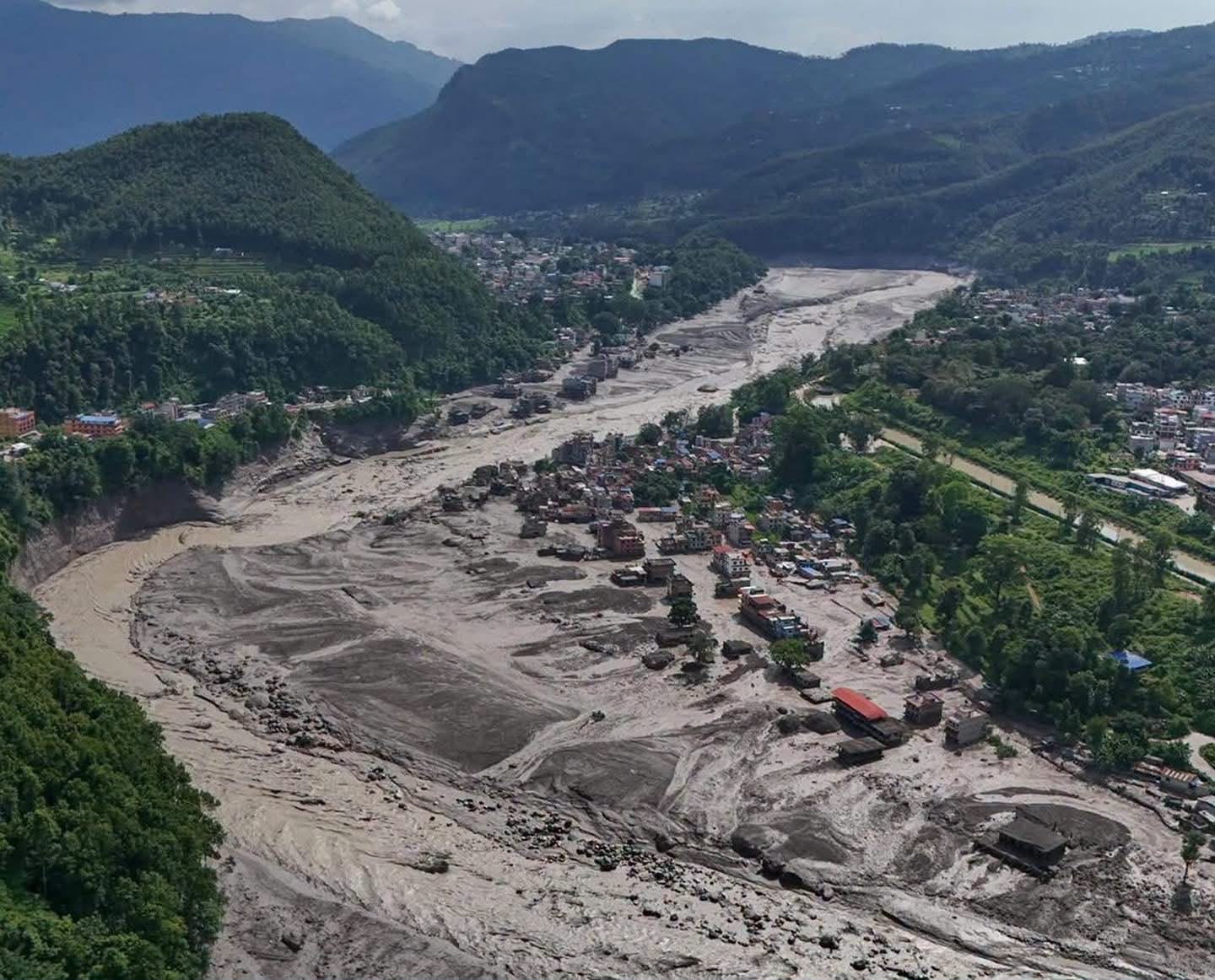
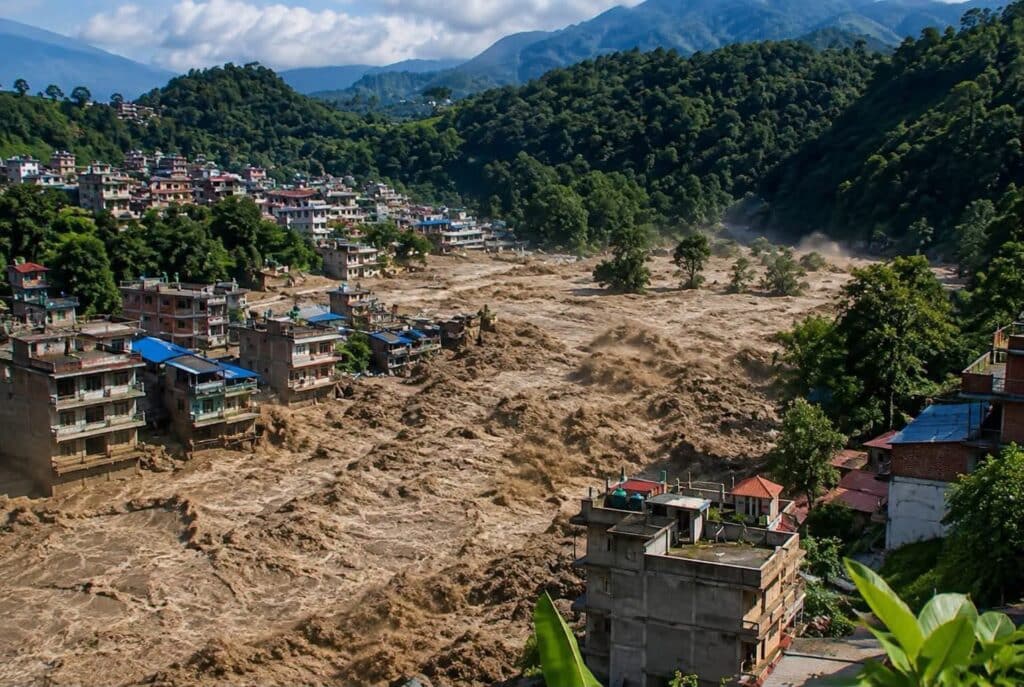
On the morning of 26 August 2026, a major flood and debris-flow event affected the Bhote Koshi River and the wider Trishuli river corridor in northern Nepal.
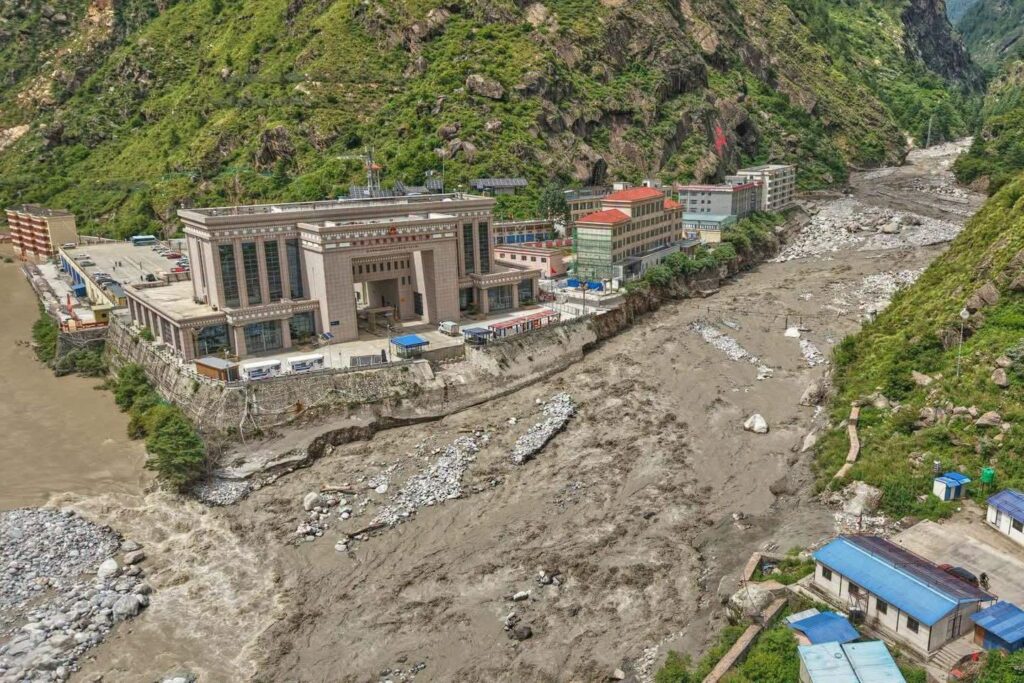
The disaster caused extensive damage around Rasuwa, including the area around the Rasuwagadhi border crossing. Roads, bridges, settlements, hydropower infrastructure and other facilities were damaged or destroyed.
The effects were also felt downstream, with authorities monitoring areas of Nuwakot, Dhading, Gorkha, Tanahun, Nawalparasi and Chitwan.
The situation was particularly serious because this is not an isolated rural area. The Rasuwa corridor is an important transport route and also provides access to several tourism areas, including:
- Langtang Valley
- Gosainkunda
- Tamang Heritage Trail
- Rasuwagadhi and the overland route toward Tibet
Search, rescue and recovery operations continued after the initial disaster, and official figures regarding deaths and missing people changed as authorities continued identification and recovery work.
Because these figures can change as recovery operations continue, we recommend checking the latest information from Nepal’s government authorities rather than relying on an old article or social media post.
Why is this important for travelers?
The main concern for tourists is not that the entire country has become unsafe. The issue is that some specific routes have been seriously affected and should not be treated as normal tourism routes until authorities confirm that they are safe and accessible again.
This distinction is important when planning a Nepal trip.
Is Nepal Safe to Travel After the Floods?
For most popular tourist destinations, there is no reason to cancel a Nepal trip simply because of the Bhotekoshi flood.
However, the answer depends on your destination and route.
The flood affected a specific river system in northern Nepal. It did not sweep across the country or directly affect every trekking region.
For example, Pokhara and the Annapurna region are in a different river basin from the main disaster area. The Everest region is also connected to a different river system, while Mustang and Manaslu have their own geographic and access conditions.
That said, Nepal is a mountainous country. Even when there is no major disaster, heavy rain can cause landslides, road closures, flight delays and temporary trail changes during the monsoon season.
So rather than asking whether “Nepal is safe” as one single destination, it is much more useful to ask:
Is my particular route currently open and suitable for travel?
That is the approach we recommend to our own clients.
| Area / Route | Current Situation | Traveler Advice |
|---|---|---|
| Rasuwa / Bhote Koshi corridor | Seriously affected by the disaster and recovery work | Avoid unless officially cleared |
| Syabrubesi / Langtang access | Access infrastructure has been damaged | Check official access status before planning |
| Timure / Rasuwagadhi | Border infrastructure severely affected | Do not attempt this route without confirmed clearance |
| Langtang Valley | Access through the affected corridor has been disrupted | Wait for official confirmation before traveling |
| Gosainkunda / Tamang Heritage Trail | Access uses the affected Rasuwa corridor | Confirm reopening before booking |
| Nuwakot | Some river-corridor areas affected | Check local road conditions |
| Dhading | Some areas affected | Check local conditions before travel |
| Kathmandu Valley | Outside the main flood path | Tourism continues, subject to normal travel conditions |
| Pokhara | Outside the directly affected corridor | Suitable for tourism; monitor weather and road conditions |
| Everest region | Not directly affected by this flood | Check normal weather, flight and trail conditions |
| Annapurna region | Outside the affected corridor | Check normal trekking and road conditions |
| Manaslu region | Outside the directly affected corridor | Check current trail and access conditions |
| Mustang | Separate geographic region | Check road and weather conditions |
| Chitwan | Some wider downstream areas require monitoring | Check current road access |
| Lumbini | Outside the affected area | Normal travel checks apply |
Important: Conditions can change quickly during Nepal’s monsoon season. This information should be used as a general guide, not as a replacement for checking the latest road, trail and weather conditions before departure.
Safe Places to Visit in Nepal After the Flood
Kathmandu Valley
Kathmandu, Patan and Bhaktapur were not directly in the path of the Bhotekoshi flood.
The Kathmandu Valley’s major cultural attractions—including Swayambhunath, Boudhanath and Pashupatinath—continue to be important destinations for visitors.
Hotels, restaurants, cultural sites and tourism services continue to operate.
The main thing to keep in mind is that road travel outside Kathmandu Valley can be affected by monsoon weather and landslides, so check your particular route before setting off.
Pokhara and the Annapurna Region
For many travelers, this is particularly good news.
Pokhara was not in the direct path of the Bhotekoshi flood.
Pokhara, Phewa Lake, Sarangkot and the surrounding trekking areas remain important destinations for visitors.
Popular routes such as:
- Annapurna Base Camp
- Annapurna Circuit
- Ghorepani–Poon Hill
- Mardi Himal
- Australian Camp
are geographically separate from the main flood corridor.
However, September is still a period when weather conditions can change quickly. Trail conditions, road access and mountain visibility should always be checked shortly before departure.
At Altitude Thrill Adventure Travel, we monitor route conditions when planning trips from Pokhara and can adjust an itinerary when necessary.
[Internal Link: Annapurna Base Camp Trek]
Everest Region
The Everest region is also outside the area directly affected by the Bhotekoshi flood.
Lukla, Namche Bazaar and the Everest Base Camp trekking route are connected to the Dudh Koshi river system, rather than the Bhote Koshi–Trishuli corridor affected by this disaster.
This means the Bhotekoshi flood does not automatically make the Everest Base Camp trek unsafe.
However, Everest is a high-altitude trekking destination, and safety depends on many factors beyond this particular flood. Weather, visibility, Lukla flight operations, trail conditions and altitude are all important.
If you are planning an Everest trek, check the latest conditions shortly before departure and allow some flexibility in your schedule.
[Internal Link: Everest Base Camp Trek]
Chitwan National Park
Chitwan is outside the main disaster area, although parts of the wider river system downstream have been monitored following the flooding.
Tourism activities in Chitwan, including jungle safaris, wildlife viewing, canoeing and cultural experiences, can continue depending on local conditions.
The bigger consideration for many travelers is road access.
If you are traveling to Chitwan by road from Kathmandu or Pokhara, check the latest road conditions before leaving, particularly during periods of heavy rainfall.
[Internal Link: Chitwan National Park Tour]
Lumbini
Lumbini, the birthplace of Lord Buddha, is well outside the main Bhotekoshi disaster corridor.
The area remains an important destination for travelers interested in Buddhist heritage, culture and history.
If you are combining Kathmandu, Pokhara and Lumbini in one itinerary, there is no reason to cancel the entire trip simply because of the flood in northern Nepal.
As always, check current road and weather conditions before traveling overland.
Mustang
Mustang is also outside the Bhotekoshi flood corridor.
Lower Mustang, Muktinath and Kagbeni lie within the Kali Gandaki region, geographically separate from the affected river system.
Upper Mustang is even farther into the trans-Himalayan landscape.
However, Mustang has its own travel challenges. Mountain roads can be affected by rain, landslides and changing conditions, particularly on the approach to Jomsom.
So although the Bhotekoshi flood is not the reason to cancel a Mustang trip, current road and weather conditions should still be checked.
Upper Mustang Trek
Manaslu Region
The Manaslu Circuit is also outside the directly affected Bhotekoshi corridor.
As with every remote Himalayan trek, conditions can change quickly. Road access, weather, trail conditions and local circumstances should be checked before departure.
The current flood does not mean that the entire Manaslu region is closed.
What About Langtang and Gosainkunda?
This is the area where travelers should be especially careful.
Langtang and Gosainkunda are different from destinations such as Pokhara, Annapurna and Everest because access to these trekking areas passes through Rasuwa.
Rasuwa was one of the areas seriously affected by the disaster.
The road toward Syabrubesi, which is the main access point for Langtang Valley, suffered damage, and recovery work has been taking place in the affected corridor.
For this reason, we would not recommend simply arriving in Kathmandu and assuming you can travel to Langtang as normal.
If you already have a Langtang or Gosainkunda trek booked, speak directly with your trekking agency and ask for the latest confirmed access information.
Do not rely solely on a booking website, an old itinerary or a social media post.
Depending on the situation, travelers may be able to consider alternative trekking destinations such as Annapurna Base Camp or Mardi Himal.
The important point is to wait for reliable confirmation before entering an affected area.
Is Kathmandu Airport Open?
The flood did not directly affect Tribhuvan International Airport in Kathmandu.
However, there is an important difference between airport operations and road or trekking conditions.
An airport can be operating normally while a particular road outside the Kathmandu Valley is closed because of landslides or flood damage.
If you are flying into Nepal, check your individual flight status with your airline before traveling.
If your itinerary includes a mountain flight, such as the flight to Lukla, we also recommend keeping a buffer day in your itinerary.
Weather-related flight delays are common in the Himalayas, even when there is no major disaster.
How to Travel Safely in Nepal in 2026
A few simple precautions can make a big difference.
1. Check conditions shortly before your trip
Do not rely on information that was published several weeks or months ago.
Ask your hotel, trekking company, guide or local operator about current road and trail conditions.
2. Use an experienced local operator
Local guides and operators often know about road closures, damaged sections and temporary route changes before that information becomes widely available online.
3. Keep your itinerary flexible
This is especially important during the monsoon season.
A road may be open in the morning and temporarily blocked later in the day after heavy rain.
4. Allow extra time for flights
If you are connecting through Kathmandu or taking domestic mountain flights, give yourself some flexibility.
5. Respect road and trail closures
If authorities have closed a road or trail, don’t try to find an unofficial way around the closure.
6. Get appropriate travel insurance
Your insurance should be suitable for the activities you are planning. If you are trekking at altitude, check whether your policy covers trekking, medical treatment, emergency evacuation and trip interruption.
7. Follow local advice
Conditions on the ground are more important than an old itinerary printed before the disaster.
How Altitude Thrill Adventure Travel Can Help
At Altitude Thrill Adventure Travel, we are a Nepal-based trekking and adventure travel company operating from Pokhara.
We don’t believe in promising travelers that Nepal is “100% safe.” Nepal is a Himalayan country, and mountain travel always involves some level of uncertainty.
What we can do is help you make informed decisions.
Before confirming an itinerary, we can check the route, consider current access conditions and discuss alternatives when necessary.
If a particular route becomes unsuitable, our goal is not simply to cancel your holiday. Where possible, we look at other destinations that can give you a great Nepal experience without putting you in an affected area.
Whether you are interested in trekking, cultural tours, mountain adventures or a customized Nepal itinerary, our team can help you plan around current conditions.
Supporting Nepal Through Responsible Tourism
Natural disasters can have a major impact on local businesses.
Guides, porters, drivers, hotel owners, restaurants, small shops and many other people depend on tourism for their income.
That doesn’t mean travelers should enter disaster-affected areas.
Instead, if your chosen destination is open and suitable for travel, continuing with your Nepal holiday can provide valuable support to communities that depend on tourism.
If you visit Nepal after the floods:
- Choose destinations that are currently open.
- Respect road and trail closures.
- Support local guides, porters and businesses.
- Avoid visiting disaster areas simply to take photographs.
- Follow instructions from local authorities.
- Be flexible if your itinerary needs to change.
Responsible tourism is particularly important during recovery.
Sample Nepal Itineraries After the Flood
If you are concerned about traveling to Nepal but still want to visit in 2026, there are plenty of alternatives that don’t require traveling through the affected Rasuwa corridor.
7-Day Nepal Culture & Pokhara Trip
Kathmandu → Pokhara → Sarangkot → Pokhara → Kathmandu
A good option for travelers who want Himalayan scenery, culture and relaxation without committing to a long trek.
10-Day Annapurna Experience
Kathmandu → Pokhara → Ghorepani/Poon Hill → Pokhara → Kathmandu
A popular Himalayan experience combining Kathmandu’s cultural heritage with trekking in the Annapurna region.
Everest Base Camp Trek
Kathmandu → Lukla → Namche Bazaar → Everest Base Camp → Lukla → Kathmandu
For travelers looking for a classic Himalayan trekking experience, the Everest region remains separate from the Bhotekoshi flood corridor.
These itineraries are examples only. Exact routes and schedules should always be checked against current weather, road, flight and trail conditions.
What Travelers Should Avoid Right Now
If you are traveling in Nepal after the Bhotekoshi disaster, please use common sense and local advice.
Do not:
- Enter the Rasuwa–Bhote Koshi disaster area simply to see the damage.
- Attempt to cross damaged bridges or closed roads.
- Travel toward the Rasuwagadhi border without official confirmation.
- Assume that a road has reopened because an old map shows it.
- Rely entirely on social media for current safety information.
- Ask your driver or guide to bypass an official closure.
- Confuse similarly named rivers or locations with the affected Bhote Koshi corridor.
The best travel decision is usually the simplest one: if authorities or your local operator say a route is closed, choose another route.